Introduction
Launching and maintaining a business is not just about having a great product or service. A great business idea needs to be supported by a solid legal foundation. Legal documents are not just a matter of compliance they protect your business, define roles and responsibilities, minimize liability, and save time and money in preventing disputes.
In their early days, many startups and small companies forget or don’t prioritize legal contracts, not appreciating their value until times get tough. Lack of documentation can get your business exposed to regulatory fines, partnership disputes, employment litigation and loss of revenues.
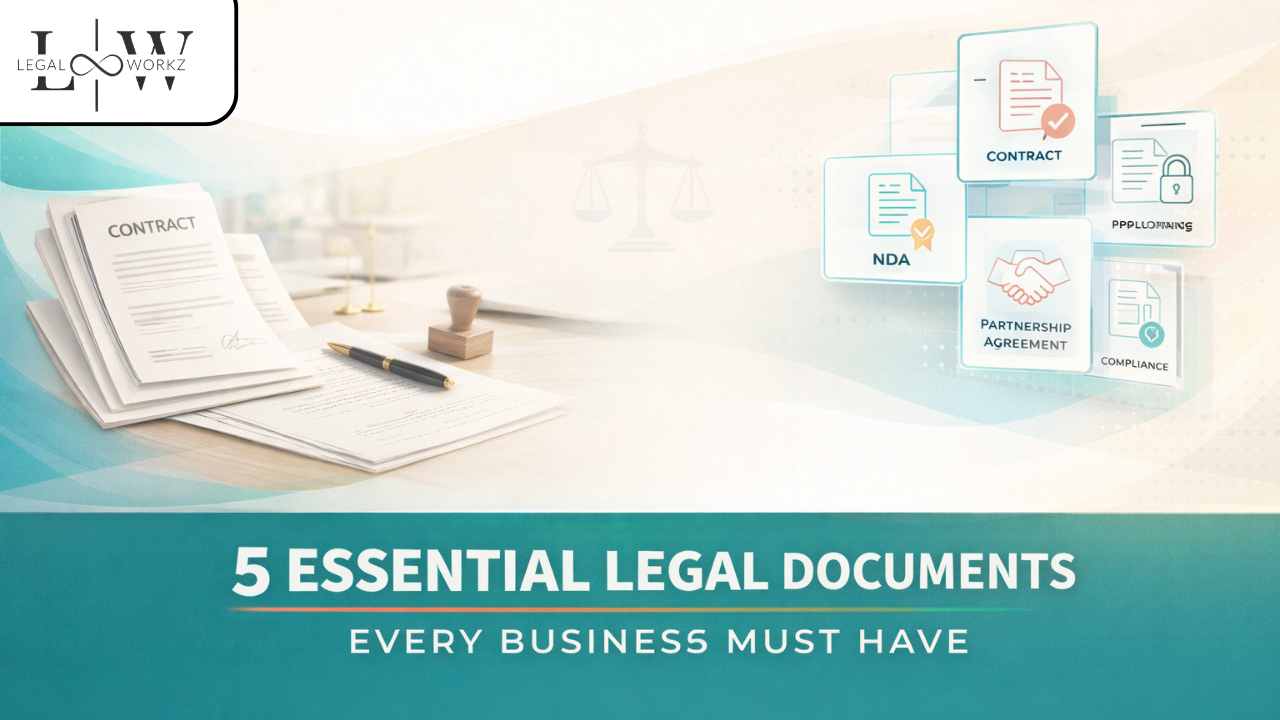
There are certain basic legal documents that every business needs in order to operate with some sense of confidence and continuity. Here, we discuss five of the most important legal documents your business needs and why they are essential.
Business Registration and Incorporation Documents
The process of being legally accepted to operate a business in Ghana begins with the formal incorporation. If you are a sole trader, partnership, LLP or private limited company, your business is only once official incorporation documents have been drawn up to prove it exists as its own legal entity.
These documents typically include:
- Certificate of incorporation or registration
- Memorandum of Association (MOA)
- Articles of Association (AOA)
- Partnership deed (if applicable)
Why it matters:
Through registration, business owners get to shield their private assets if not necessary) in organizations such as LLPs or companies. It also earns credibility with customers, investors and banks. Acting as an unregistered entity can result in a variety of compliance problems and fines.
Founders’ Agreement or Partnership Agreement
For businesses with more than one founder or partner, a written agreement to that effect is imperative. Keeping things informal often only clears the way for later misunderstandings, conflicts, and legal issues.
A founders or partnership agreement sets out:
- Ownership structure and equity distribution
- Roles and responsibilities
- Decision-making authority
- Profit-sharing terms
- Exit clauses and dispute resolution
Why it matters:
But without a well-defined agreement, disputes among founders can disrupt the business and even destroy it. It serves as a protection to all the parties by providing clarity and minimizing future arguments.
Employment Contracts and HR Policies
When you have employees, so do employment documents. The employment contracts are for the benefit, and provide protection, to both the employee and employer.
Key elements typically include:
- Job role and responsibilities
- Salary and benefits
- Confidentiality obligations
- Termination clauses
- Non-compete or non-solicitation (if any)
Apart from the employment contracts, businesses should also keep records of HR policies on leaves, office ethics and employee conduct, procedure for addressing grievances and adherence to labor laws.
Why it matters:
Transparency This also helps to cut down on the disputes in the workplace, ensure adherence to labor laws and regulations: as well as protect confidential data of your business. It fosters professionalism and transparency within the office as well.
Non-Disclosure Agreements (NDAs)
In these competitive times, safeguarding secret business data is everything. Whether you are engaging in discussions with investors, dealing with vendors or hiring employees, your confidential information should be protected.
A confidentiality agreement or a Non-Disclosure Agreement (NDA) 1. parties will keep secret:
- Trade secrets
- Business strategies
- Client information
- Financial data
- Proprietary processes
Why it matters:
Without an NDA, the proprietary or sensitive information can be exploited and/or come out to light with no legal recourse. The purpose of the NDAs is to protect intellectual property and business integrity.
Client and Vendor Agreements
Transparent contracts with customers and suppliers are necessary for successful business. These agreements set expectations and avoid misunderstandings.
10.1 A good client or vendor agreement will usually include the following:
- Scope of services or goods
- Payment terms and timelines
- Deliverables and performance standards
- Liability clauses
- Dispute resolution mechanisms
Why it matters:
Uncertainty in business dealings is frequently followed by payment disputes, delay, legal claims. Right contracts ensure that money is safe and there can be accountability from both party.
The Importance of Professional Review
However, it’s just as important to create and review them professionally. For businesses, poorly worded contracts can also lead to hidden risks, ambiguities and things which are not in-keeping with industry standards.
Professional legal review ensures:
- Compliance with applicable laws
- Clear and enforceable language
- Balanced risk allocation
- Recording of rights and duties in writing
Platforms such as LegalWorkz enable companies to talk to experienced lawyers who create, review and manage all vital legal documents without hassle.
Building a Strong Legal Foundation
Legal paperwork isn’t simply paperwork, it’s also an economic proposition. When structured correctly, legal documents:
- Protect assets and reputation
- Clarify responsibilities
- Reduce operational risk
- Improve investor and stakeholder confidence
- Prevent costly disputes
Spending time and money on good legal documentation right now can help a great deal of cost as well as a lot of pain in the back when it comes to… down the road.
Conclusion
Behind every thriving business is a strong legal foundation. From registration papers to partnership contracts, employment agreements and vendor contracts, these are significant legal documents that keep your business safe from uncertainty and risk. It might be tempting to keep your head in the sand regarding the legal stuff; but it can really bite you if you ignore important documents. By having the five legal documents, correctly drafted and reviewed, companies can maintain clarity including: a sense of security in their operations. Proactively attending to legal documentation enhances both compliance and long-term stability and trust. And for businesses looking to grow responsibly, the wrong commercial documents is not a choice it’s a necessity.